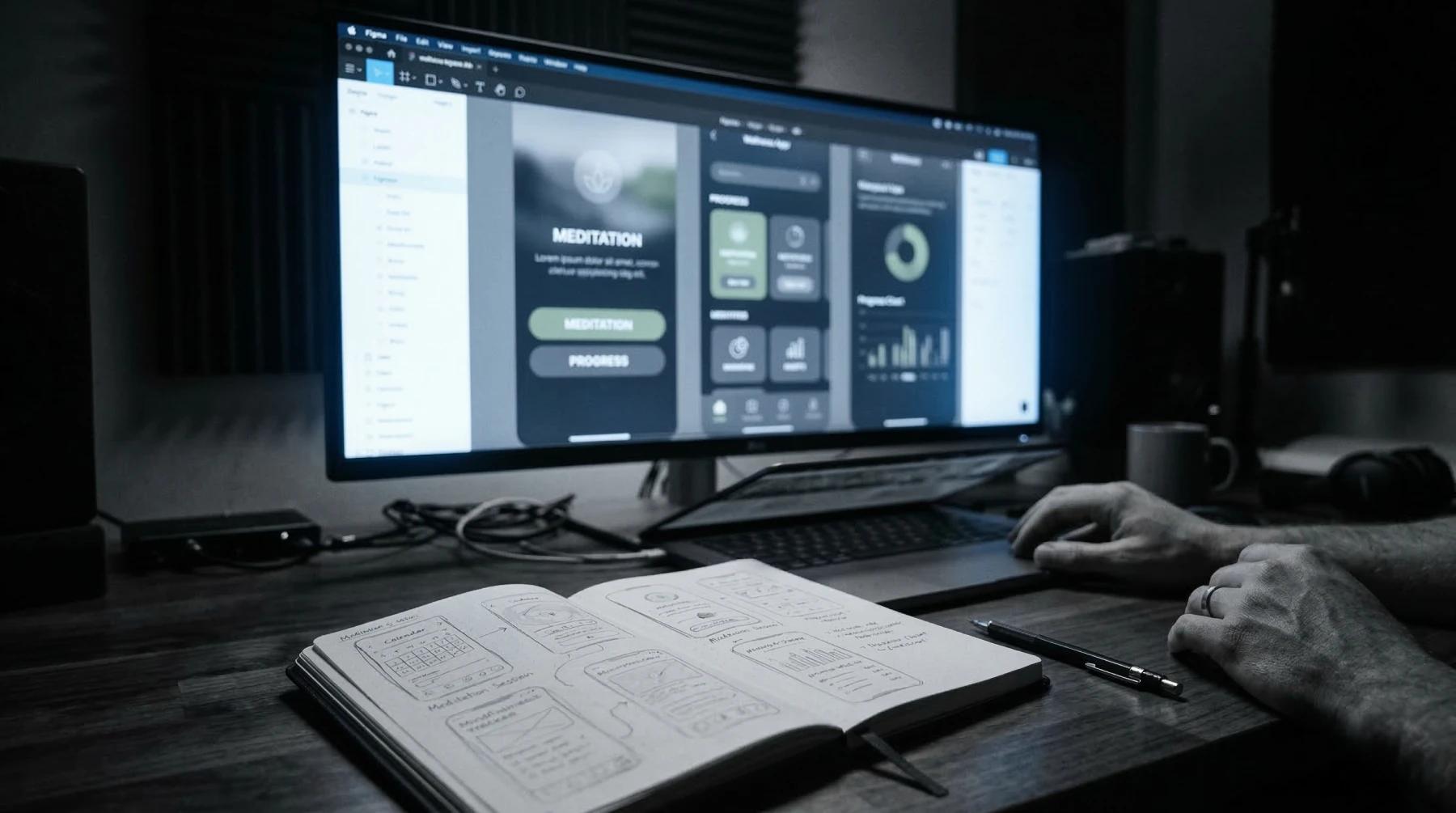
Yoga Hub came to us in January with a straightforward brief that had a non-straightforward constraint: they needed a live booking platform before their in-studio season started. Not a "we'd love to launch" date — an actual hard deadline with classes already being marketed, instructors already scheduled, and customers expecting to book online.
The timeline was 21 days. The scope included a marketing site, a class directory with real-time scheduling, instructor profiles, a booking flow with Stripe integration, and a member dashboard. By any traditional agency measure, this was a 10–12 week project.
We shipped on day 21. Here's exactly how.
The Week-by-Week Breakdown
We spent the first two days in a single working session establishing the design system: typography, colour tokens, component library, responsive grid. Rather than handing off a Figma file and waiting for feedback, we built directly in the browser — the client reviewed working HTML, not static screens. Feedback rounds that usually take days happened in hours because the client could click things.
While the design system was still being iterated, we started building pages in parallel. The marketing site (home, about, instructor bios) was scaffolded with AI assistance while the booking system architecture was being planned. We used Supabase for the backend — it let us get a working database and API up in a day rather than building and deploying a custom backend.
The booking system was the highest-risk component — real-time availability, conflict detection, payment processing, confirmation emails, calendar sync. We built it against a live Supabase instance from day one rather than mocking it. This meant bugs surfaced early when they were cheap to fix, not during QA when they're expensive. Stripe integration took one afternoon, not one week.
Three days of final polish: mobile QA across real devices, performance audit (we hit 94 on PageSpeed on launch day), accessibility sweep, instructor onboarding, and a soft launch with 50 invited members to catch any edge cases before the public announcement.
What Made It Possible
Building in the browser from day one
The biggest time sink in traditional agency work is the design-to-development handoff. We eliminated it by designing in the medium. A senior designer and a developer working in the same codebase simultaneously means no translation layer, no interpretation errors, no "this doesn't match the Figma" conversations.
AI for the repetitive structural work
Component scaffolding, form validation logic, database schema generation, email template HTML — these are the parts of development that aren't intellectually difficult but are time-intensive. AI tools handled the structural drafts; humans reviewed, refined, and integrated them. This doesn't reduce quality — it redirects human attention to the parts that actually require judgment.
Ruthless scope management
We cut three features from the original brief: a loyalty points system, a custom video player for instructor intro videos, and a cancellation waitlist. Not because they're bad features — because they weren't needed for launch. A 21-day timeline requires knowing exactly what the minimum viable product actually is, and being willing to defend that call.
Speed doesn't come from working faster. It comes from doing less of what doesn't matter and more of what does.
What We Would Do Differently
The client communication cadence was too light in week two. We were moving fast and assumed alignment, but there were two design decisions that needed to be revisited in week three because we hadn't flagged them as choices. In tight timelines, over-communication is cheaper than course-correcting late.
We also underestimated the time for instructor onboarding — getting seven instructors to submit profile photos, bios, and schedule data in a format we could actually import. Non-technical tasks with external dependencies are often the real bottleneck on fast projects. We now build client onboarding prep into the project plan explicitly, starting in week one.
The Result
Yoga Hub launched on schedule. In the first month, 340 classes were booked through the platform with a 4.2% booking abandonment rate — well below the industry average of 12–15% for booking flows. The performance score stayed above 90. No bugs were escalated post-launch that required more than a one-line fix.
It's one of the projects we're proudest of — not because it was complicated, but because it was disciplined.